
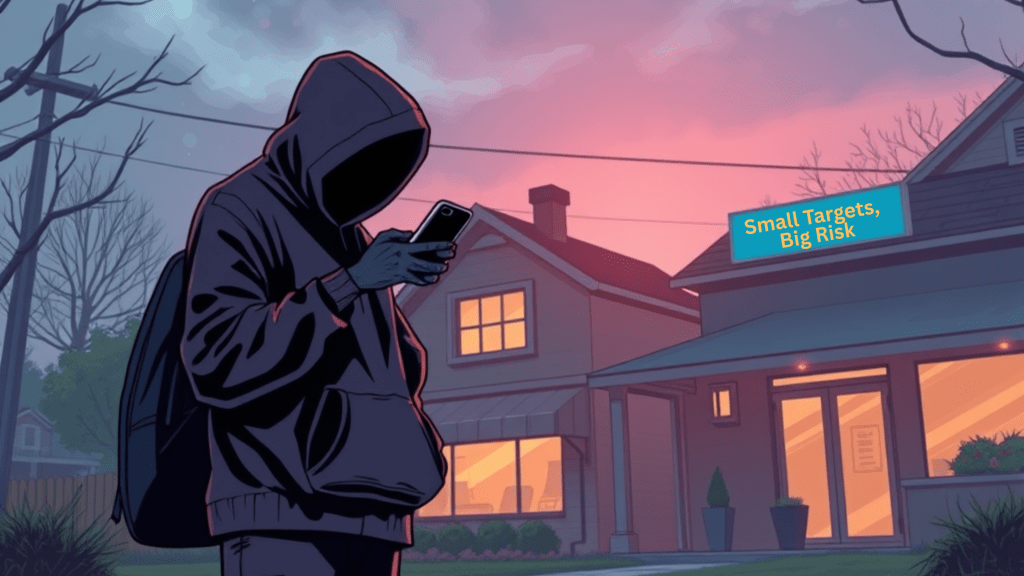
Recent geopolitical tensions involving Iran rarely stay confined to physical borders. In today’s world, conflict spills into cyberspace quickly — While government and critical infrastructure sectors tend to be the focus, this affects small businesses, nonprofits, churches, and everyday individuals as well.
At Shepherd Security, we focus on practical, grounded cybersecurity. And when global tensions escalate, one of the most immediate and likely ripple effects is not missiles or malware campaigns against Fortune 500 companies.
It’s phishing.
It’s social engineering.
It’s deception that feels timely, urgent, and believable.
Why Situations Like This Increase Cyber Risk
Whenever headlines are dominated by international conflict, attackers seize the moment. Fear creates urgency. Urgency overrides caution.
Cybercriminals — whether financially motivated or state-aligned — know this.
They will not usually attack your small church directly with advanced cyber weapons. Instead, they exploit something much simpler:
Human emotion.
Expect to see phishing campaigns themed around:
- “Emergency security alerts” tied to global conflict
- Fake donation requests for humanitarian aid
- Spoofed government advisories
- Bogus banking alerts claiming foreign transaction risks
- Fake news updates requiring login verification
- Vendor emails warning of supply chain disruption
These attacks don’t look evil.
They look responsible.
They look urgent.
They look like something you should click.
And that’s the danger.
The Most Likely Threat: Phishing & Social Engineering
Phishing and social engineering are low-cost, high-return attack methods. They require no advanced exploit — just a convincing message.
For small businesses, nonprofits, and churches, the biggest risks include:
1. Credential Harvesting
Attackers send emails that appear to be:
- Microsoft 365 password reset notices
- Banking fraud alerts
- Payroll updates
- Donation platform verification requests
You click. You log in.
You’ve just handed them the keys.
2. Business Email Compromise (BEC)
An attacker spoofs:
- A pastor requesting a wire transfer
- A board member asking for gift cards
- A vendor requesting updated ACH details
Because it feels urgent and tied to global instability, people act quickly.
3. Fake Donation Campaigns
Churches and nonprofits are especially vulnerable here. During geopolitical crises, fake humanitarian campaigns surge. Attackers may:
- Clone legitimate charity websites
- Send emails requesting emergency aid donations
- Impersonate well-known ministries
Your organization’s reputation can suffer — or your members can be financially harmed.
Why Small Organizations Are Attractive Targets
Many assume attackers focus only on governments or large corporations.
In reality:
- Small organizations often lack dedicated security teams.
- Churches frequently rely on volunteers for tech administration.
- Nonprofits prioritize mission over infrastructure.
- Individuals reuse passwords and delay updates.
Attackers know this.
And during global uncertainty, they cast a wide net.
Practical Steps You Can Take Right Now
You don’t need an enterprise security budget to reduce risk. You need discipline and clarity.
1. Enable Multi-Factor Authentication (MFA)
If your email, banking, payroll, or donation platform doesn’t have MFA enabled — fix that immediately.
MFA alone can stop the majority of credential-based attacks.
2. Slow Down Urgency
Train your team and your family:
If an email creates panic, pause.
Verify:
- Hover over links before clicking.
- Check sender domains carefully.
- Call the person directly before wiring money or buying gift cards.
Attackers rely on speed. You win by slowing down.
3. Lock Down Email
- Use strong, unique passwords (with a password manager).
- Disable legacy authentication if possible.
- Turn on login alerts.
Email is the gateway to everything else.
4. Confirm Financial Changes Out-of-Band
If someone requests:
- Wire transfer changes
- ACH updates
- New payment instructions
Verify by phone using a known number — not the number in the email.
5. Educate Your People
Security awareness doesn’t need to be complicated.
Send a simple internal message:
“Due to global tensions, we expect an increase in phishing emails. Verify unexpected requests. Do not click urgent links without confirming.”
Awareness alone reduces risk dramatically.
6. Backups Matter
While phishing is most common, destructive attacks sometimes follow geopolitical escalation.
Make sure:
- Your data is backed up
- Backups are offline or immutable
- You’ve tested restoration
Hope is not a strategy. Tested backups are.
For Individuals
If you’re not running an organization or just managing your household, you still have exposure.
- Use a password manager.
- Turn on MFA everywhere.
- Be cautious of donation links shared on social media.
- Verify news from reputable sources before clicking embedded links.
- Ignore political “exclusive” leaks sent via email or text.
And remember: legitimate organizations do not ask for gift cards.
The Bigger Picture
Cyber warfare rarely announces itself. It blends into everyday digital noise.
In times of geopolitical tension involving Iran or any nation-state conflict, most small organizations won’t face sophisticated zero-day exploits.
They’ll face something much more common:
A well-written email.
A convincing phone call.
A fake sense of urgency.
At Shepherd Security, we remind people that cybersecurity is less about paranoia and more about preparedness.
Attackers exploit emotion.
Defenders cultivate discipline.
If you lead a small business, nonprofit, or church, now is the time to:
- Review your email security
- Reconfirm financial verification procedures
- Communicate clearly with your team
- Strengthen basic controls
The threat landscape shifts quickly.
But the fundamentals never change.
Stay vigilant.
Stay steady.
Protect your flock.

 shepherdsecurity.net
Leave a comment